
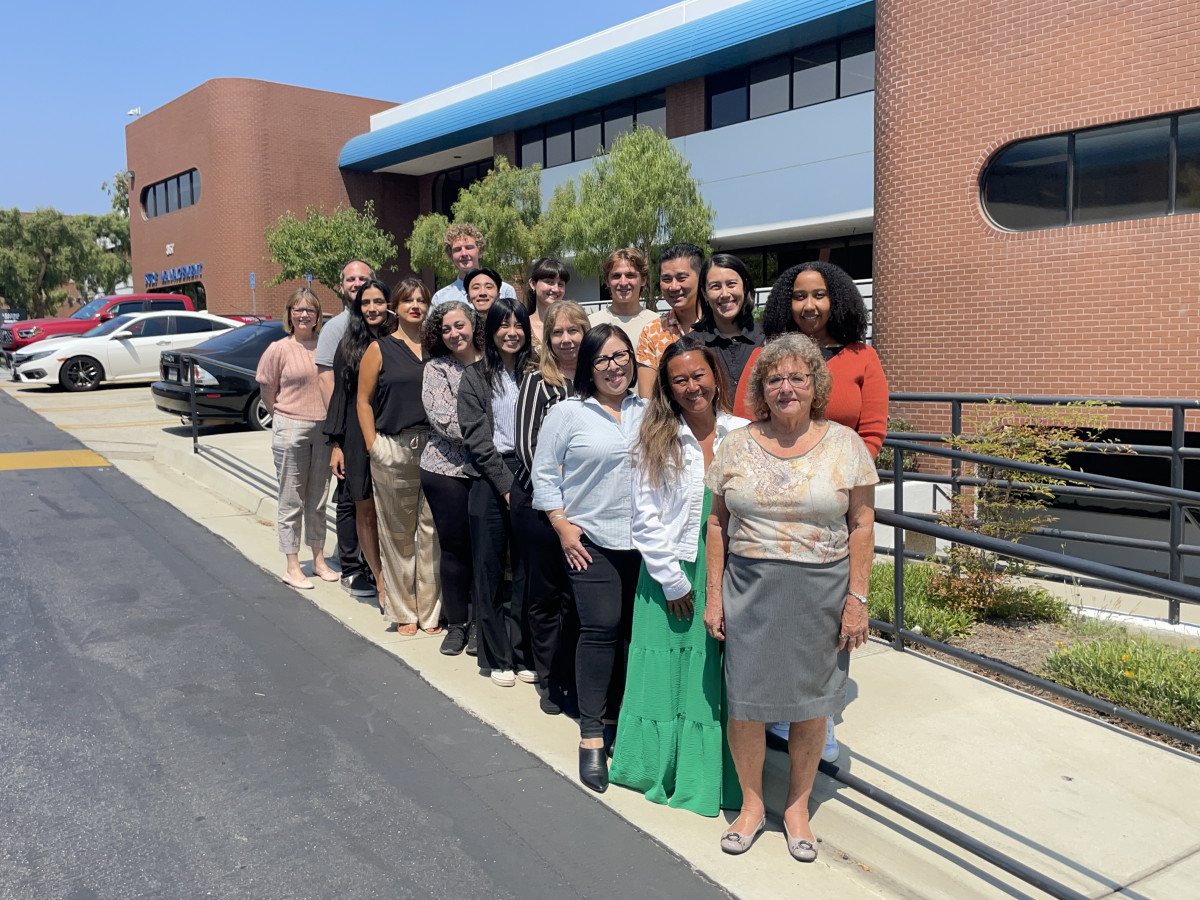
The South Bay Cities Council of Governments staff at its new office location at 357 Van Ness Way in North Torrance
To better meet the needs of its member cities and partner agencies, the South Bay Cities Council of Governments (SBCCOG) has relocated to a new office near Old Torrance. The larger, customized space will better accommodate staff and volunteers as they embark on a growing 2025/26 work program.
HOMELESS SERVICES
Prioritizing Resources
This year, the SBCCOG is managing more than $14 million annually in funds allocated through Los Angeles County to the South Bay through the voter-approved Measure A half-cent sales tax. Of this amount, $3 million will go toward homeless services programs and $11 million will support housing production, preservation and renter protections. The $11 million will be received through the Los Angeles County Affordable Housing Solutions Agency (known as LACAHSA). This funding constitutes a 600% increase from what the SBCCOG has previously received under the Measure H Homeless Services quarter-cent sales tax, which has been replaced with Measure A.
Leveraging Progress
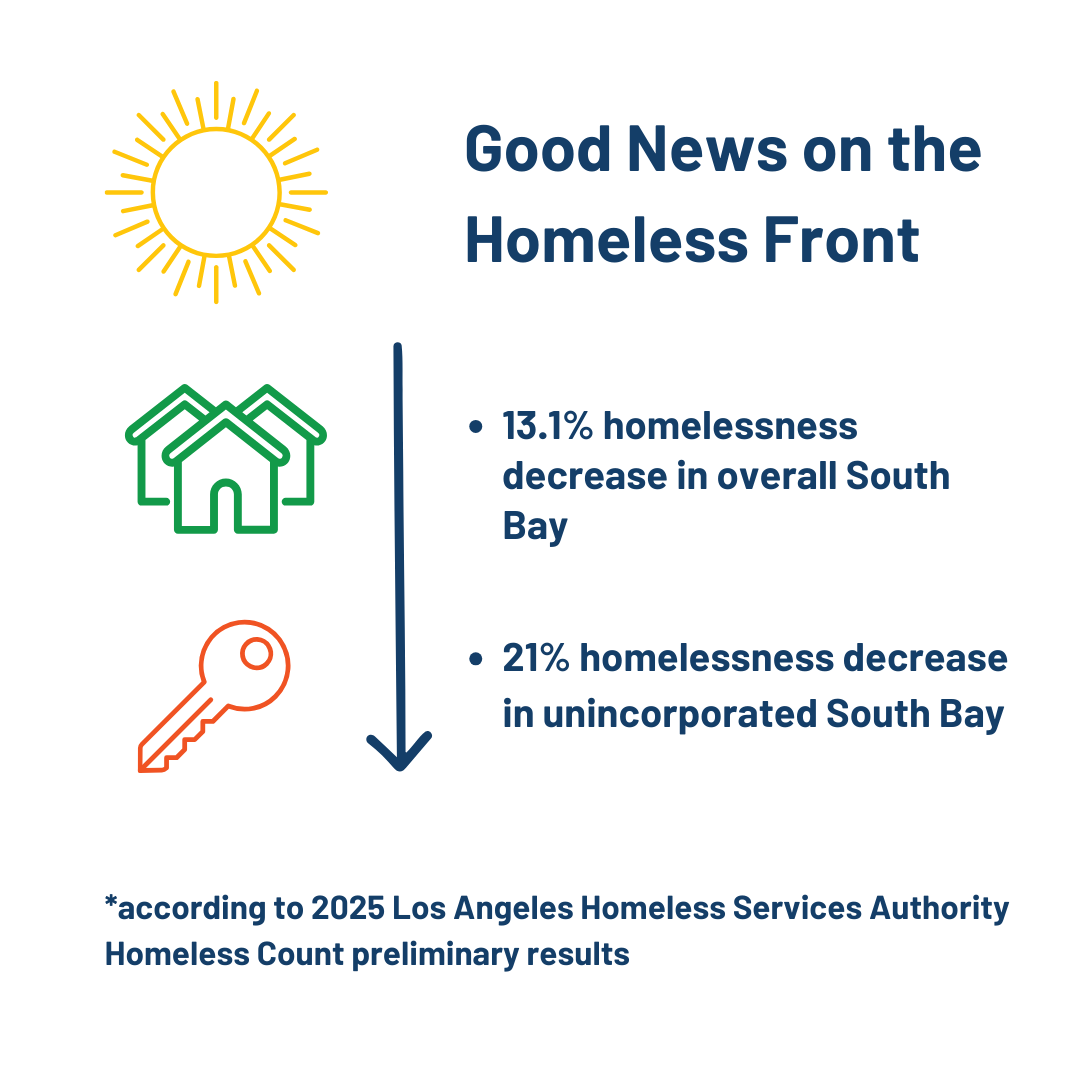 Through innovative and award-winning programs created through Measure H funding, the South Bay has experienced a 13.1% decrease in street homelessness, according to 2025 Homeless Count
preliminary results.
It took hard work to get there. The SBCCOG collaborated with the City of Redondo Beach to pilot the Functional Zero Street Homelessness Program. It tracked the weekly progress of unhoused individuals and customized interventions to meet their specific needs. As a result, Redondo Beach decreased its unhoused population by 90%. The program received the Eureka Award from the California Association of Councils of Governments, which recognizes the state’s most innovative regional programs.
With the additional secured funding, the SBCCOG will next work with Hermosa Beach, Manhattan Beach and Torrance to expand the Functional Zero program and then move on to other cities. It will also expand the reach of other existing programs. These include Client Aid, which funds critical just-in-time interventions, such as transportation expenses and security deposits; Inglewood street-to-interim housing interventions; investments into the Torrance Tiny Home Village; and street-to-housing case management services throughout the South Bay.
“In our 15 South Bay Cities, our per capita homeless population of 1.7 per 1,000 people is less than the national average.” said Ronson Chu, senior program manager of Homeless Services for the SBCCOG. “Through our partnership with our L.A. County supervisors Holly Mitchell and Janice Hahn, we have also decreased street homelessness in the South Bay’s unincorporated areas by 21% this past year.”
The new funding also designates dollars to address 1) housing production, preservation and ownership; 2) renter protection and homeless prevention; and 3) assistance to member cities to implement local services for the unhoused. The specific elements of these programs are being developed.
TRANSPORTATION AND LAND USE
Going Micro from “Carson to the Sea”
 The SBCCOG recently kicked its “Carson to the Sea,” project to design the extension of its Measure M-funded Local Travel Network (LTN) from Harbor Gateway and Lomita to San Pedro.
The SBCCOG planned the LTN as a 243-mile network of existing, low-speed routes. Its objective is to accommodate safer travel for micromobility vehicles (small, low-speed, zero-emission vehicles, such as street-worthy golf carts, e-bikes, pedal bikes and e-scooters) as they share lanes with larger vehicles on designated streets. The LTN launched in El Segundo in 2023. It will soon roll out in Carson, Lomita and Redondo Beach.
The SBCCOG is working with a team of consultants to address identified gaps in the LTN to improve safety within and between these communities and to develop a continuous route. This project will include two large-scale community micromobility events with opportunities to test drive vehicles and learn about micromobility safety.
Building South Bay Mobility Hubs
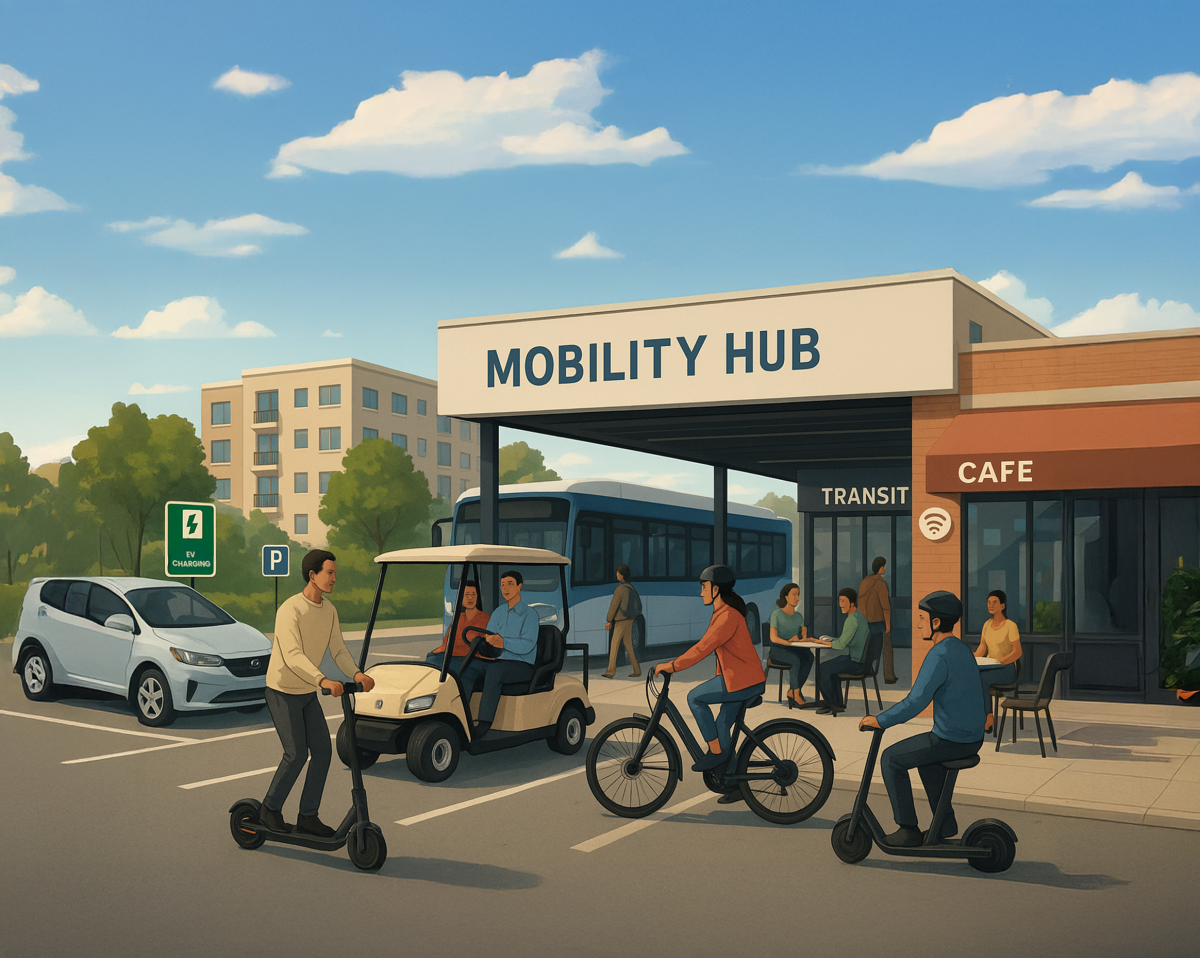
South Bay Mobility hubs are centralized locations where residents using zero-emission micromobility can transition to long-range modes of transportation, such as a regular car or public transit. They became an important piece of the South Bay’s land use and transportation strategy within its overall climate action plan. This followed a 2013 SBCCOG study that found that micromobility use made sense for the South Bay, where 70% of trips are three miles or less.
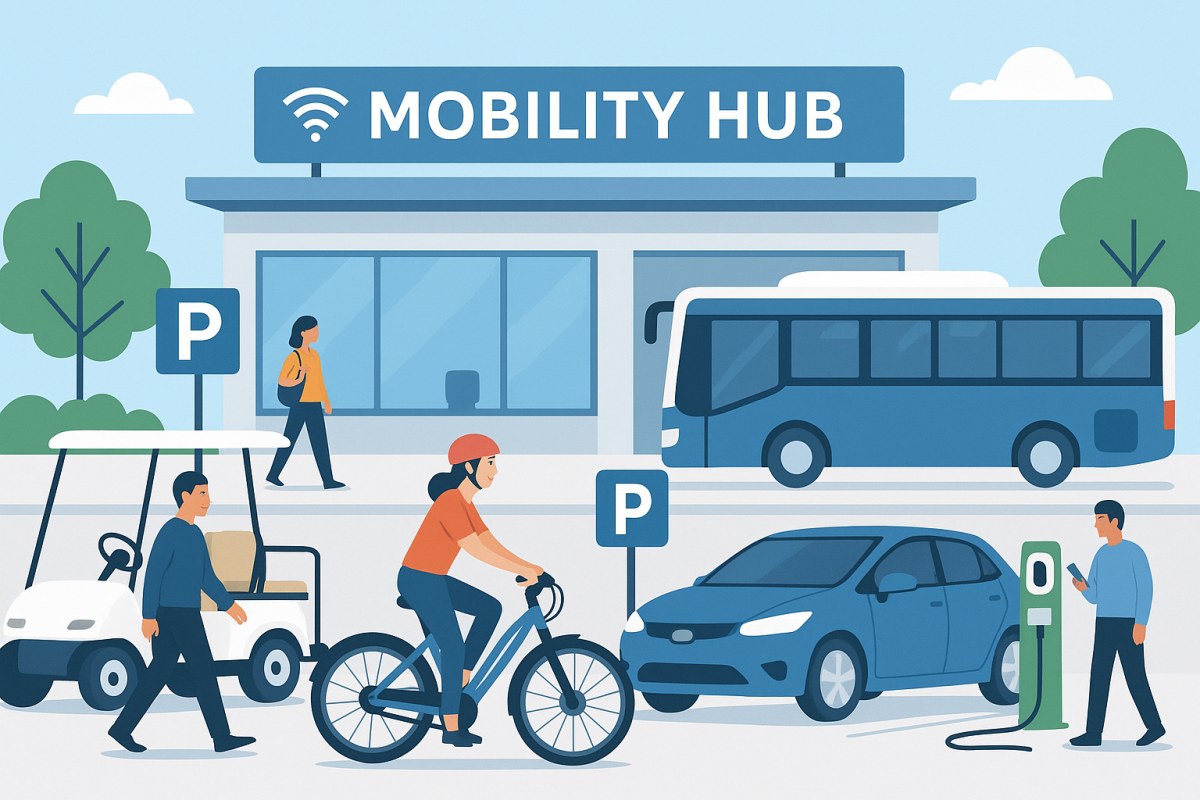
Image generated using ChatGPT
The state of California recently awarded the SBCCOG with a 2021 Regional Early Action Planning 2.0 grant to complete a South Bay Mobility Hubs Study. The study will include a conceptual design and implementation plan for four mobility hubs in Carson, Hawthorne and Torrance, and two hubs in the broader South Bay. It will outline how future and existing housing developments could be connected to mobility hubs through multiple modes of transportation, including micromobility.
“Mobility hubs within the subregion will require a sensitive approach that reflects our compact development patterns and existing travel behaviors,” said Shannon Heffernan, AICP, Land Use and Transportation Program manager for the SBCCOG. “While some mobility hubs will expand amenities and services at existing high-demand transit stops, the study will also explore mobility hubs at key community destinations, such as employment clusters, retail centers and city halls, helping to expand mobility options across the subregion.”
“Mobility hubs are designed to solve the first- and last-mile connections that are essential to successful public transit service,” adds Wally Siembab, research director for the SBCCOG. “The mobility hub study will accelerate our strategy to increase micromobility and transit use.”
These “smart” destinations would include access to the Local Travel Network and broadband access through the South Bay Fiber Network—a SBCCOG-developed fiber optic network that enables high-speed, low-cost internet connectivity for South Bay municipal facilities and public agencies.
Consultant firm Fehr & Peers will compile an inventory of 50 sites suitable for mobility hub development across the subregion. Community surveys will also be conducted.
SOUTH BAY SUSTAINABLE STRATEGY
Creating a Sustainable South Bay
Going into its fourth decade, the SBCCOG’s South Bay Environmental Services Center (SBESC) continues its equitable and cutting-edge programs aimed at helping the South Bay community become more sustainable by saving energy and water and managing waste. Through partnerships with utilities, water districts, special districts, and a regional energy network, the SBESC brings information to South Bay residents, businesses, students and public agencies. The SBESC also implements programs on behalf of its partners such as West Basin’s Rain Barrel Give-Away program, LADWP’s Cash for Kitchens program, and the SoCalREN’s Kits for Kids program. It pilots innovative green programs, including public agency facility equipment inventories.
Preparing for Climate Change
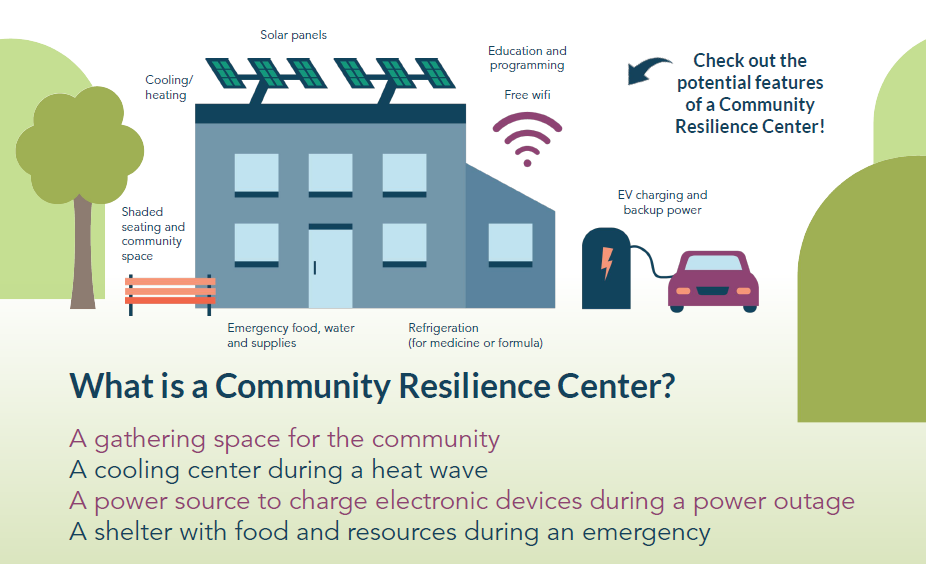
Image provided by SoCalREN
The SBCCOG is now working with Gardena, Hawthorne, Lomita and Manhattan Beach to develop Energy Resiliency Action Plans. The city-specific plans look at near- to long-term
strategies to support community preparedness for extreme weather.
Such strategies include transforming city-owned facilities into community centers that would provide shelter and resources during climate and other emergencies—such as a place to get cool during a heat wave or power outage.
“With the population of people age 65 and older expected to grow by 61% by 2040 in L.A. County, having a place to go during a heat wave or other extreme event is critical to ensuring the safety and well-being of this vulnerable population,” said Kim Fuentes, deputy executive director of the SBCCOG, who manages sustainability programs, citing data posted in August by the Los Angeles County Aging and Disabilities Department.
The SBCCOG’s partner, the Southern California Regional Energy Network (SoCalREN), is evaluating locations for these centers—up to four per city. The SBCCOG is working with cities to survey about potential locations and amenities such as WiFi, childcare and EV charging.
Finding New Savings for Businesses and Residents
The SBCCOG works with the SoCalREN and SoCalGas to provide energy-efficiency upgrades, rebates or support to businesses. SoCalGas kitchen kits and rebates support businesses in saving energy and money.
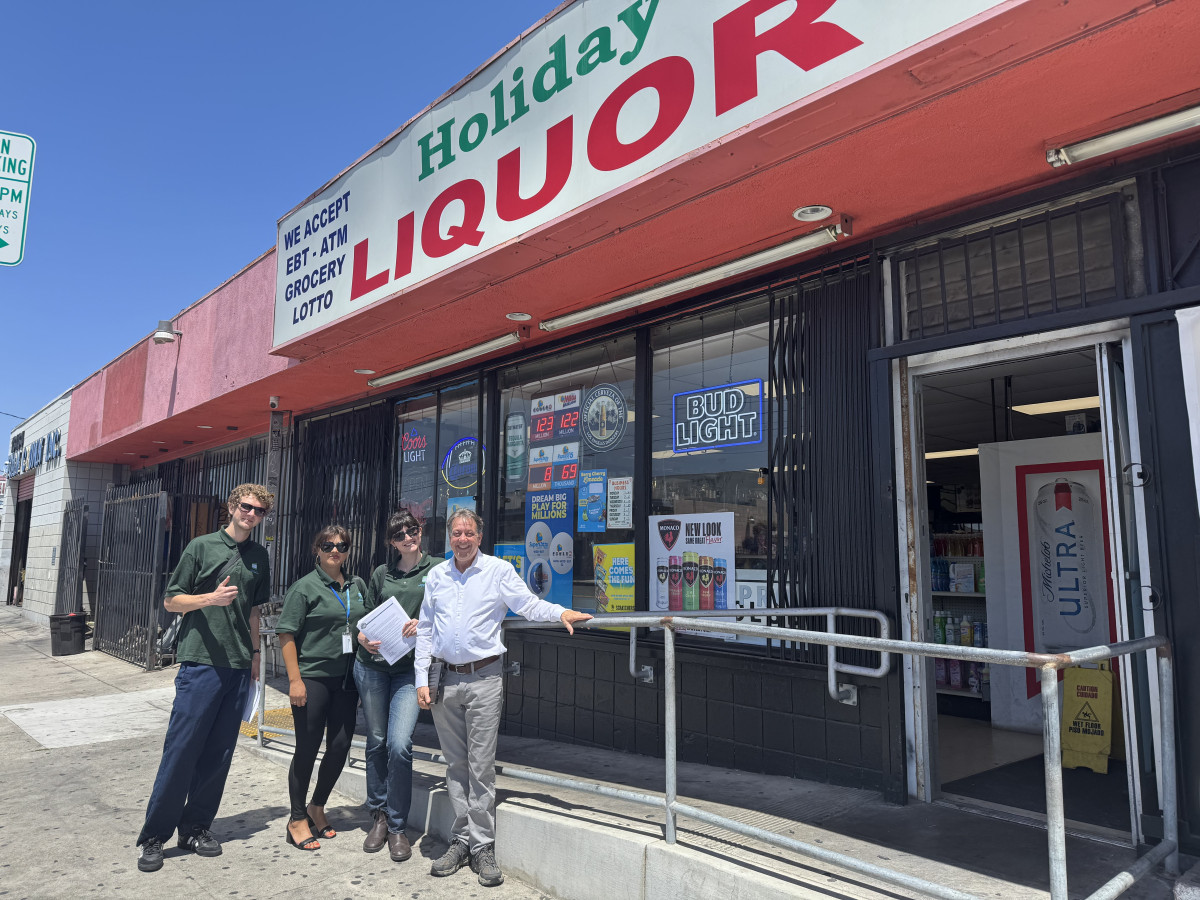
From left: SBCCOG project coordinators Zoran Trifunovic, Katty Segovia and Eleanor Murphy and SoCalREN energy advisor Lawson Ward audit and enroll Holiday Liquor in Gardena.
In a new SoCalREN program, the SBCCOG is implementing services to provide and install free energy-efficient equipment, including water heaters, LED lights and refrigerators, to commercial businesses in historically disadvantaged South Bay communities. It’s estimated that this project will save $450,000 in equipment and installation costs for local businesses.
The savings are being offered through SoCalREN’s new Food Desert Energy Equity and Commercial Direct Install Programs, administered by the engineering firm Willdan. Through door-to-door outreach, SBCCOG staff has enrolled 30 businesses in Gardena. The program will soon expand to additional South Bay communities. Audits will begin this fall in Wilmington through SoCalREN’s Residential Direct Install Program. The overall program goal is to complete more than 1,200 home installations throughout Southern California this year.
The SBCCOG to Host Open House
The SBCCOG’s new address is 357 Van Ness Way, #110 in Torrance. These programs and more will be highlighted at the SBCCOG’s open house on November 20. Look for details soon on our website.