
Written by Micah Gaudet, deputy city manager and public safety officer for Maricopa, Arizona
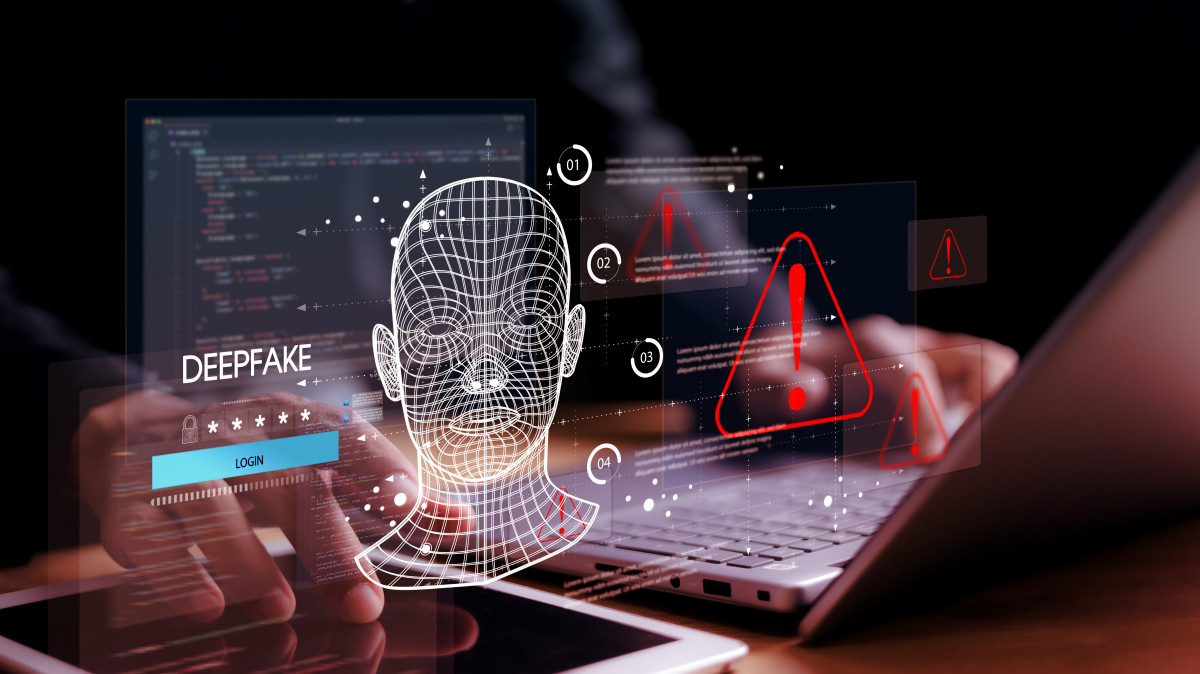
Artificial intelligence-generated deepfakes make it harder than ever to tell what’s real. A carefully crafted prompt can create very compelling images and videos. The propensity for panic or worse is right there. But I want to turn the problem on its head and address the underlying issue: What does it mean to lead with trust in a world where authenticity can be faked?
We may think the danger lies in the tools that write, speak or even look like us. But the greater risk is what happens when these tools work—what happens when they make us faster, more productive but less present. Local government doesn’t operate in systems and processes. We operate in relationships. And relationships are built not on speed but on trust.
In local government, efficiency is not our currency. Trust is.
Cities and counties are exploring AI to streamline permitting, automate responses or generate reports. These uses are helpful, but don’t assume they are neutral. When we choose speed over presence, we risk trading short-term convenience for long-term disconnection.
Here’s why this matters. In 2013, a group of experienced radiologists was asked to review standard lung scans. What they didn’t know was that the researchers had inserted an image of a gorilla (roughly 48 times the size of a typical cancer nodule) into the scan. Despite their training, 83% of the radiologists didn’t see it.
It wasn’t due to carelessness. They were focused. Their attention was tuned to look for cancer, not for gorillas. This is known as inattentional blindness—the failure to notice something obvious when your mind is locked onto something else.
In the same way, local governments that fixate on speed, efficiency and automation may unintentionally overlook the slow, human signals that build trust. AI is not the problem. It’s that when we focus only on the technical, we become blind to the relational.
The extra time it takes to return a resident’s call, sit with a neighborhood group or work through a difficult permitting issue builds legitimacy. These aren’t inefficiencies to be automated; they’re acts of trust building.
They remind people that government is not a decision-making machine. It’s a place for representation. When AI replaces those rhythms with quicker, cleaner alternatives, we risk losing more than we gain. The process is the product.
And here’s where leadership matters most: In an era where trust is fragile, people aren’t just looking for information. They’re looking for presence. Not a perfect response, but a real person who shows up, listens and acts with integrity each time.
Authentic leadership means resisting the urge to be everywhere, instantly. It means choosing real interactions over performative ones. It means using AI to facilitate human connection, not replace it.
“Authentic leadership means resisting the urge to be everywhere, instantly. It means choosing real interactions over performative ones. It means using AI to facilitate human connection, not replace it.” – Micah Gaudet
The real challenge isn’t figuring out what’s fake online. It’s committing to what’s real in public life. •
Micah Gaudet recently authored the book “Fragile Systems: An Ecological Approach to AI in Government” about developing authentic leadership in the age of AI.