
On a late Friday afternoon in November, William Gray, a manager for Beach Cities Case Management Services, received a call from El Segundo Police Sgt. Jonathan Chavez. An unhoused individual sleeping at El Segundo’s Metro Green Line station had expressed interest in being connected to shelter services. Within 15 minutes Gray joined Chavez at the station and engaged with the individual to determine what services would be most appropriate and available.
Friday afternoons are typically challenging times to secure shelter beds. But Gray made a few calls and learned of an available bed at Safe Landing in the West Athens district of Los Angeles. The individual agreed to accept a ride from the El Segundo Police Department to the shelter site.
“William was a godsend. He showed up so fast, and he knew exactly what to say and the right questions to ask to get a shelter bed,” Sgt. Chavez said. “Our training is in law enforcement, not homeless services, so it can be challenging for us to find beds. He (William) knows the system, who to call, and speaks the right language. It’s truly a partnership.”
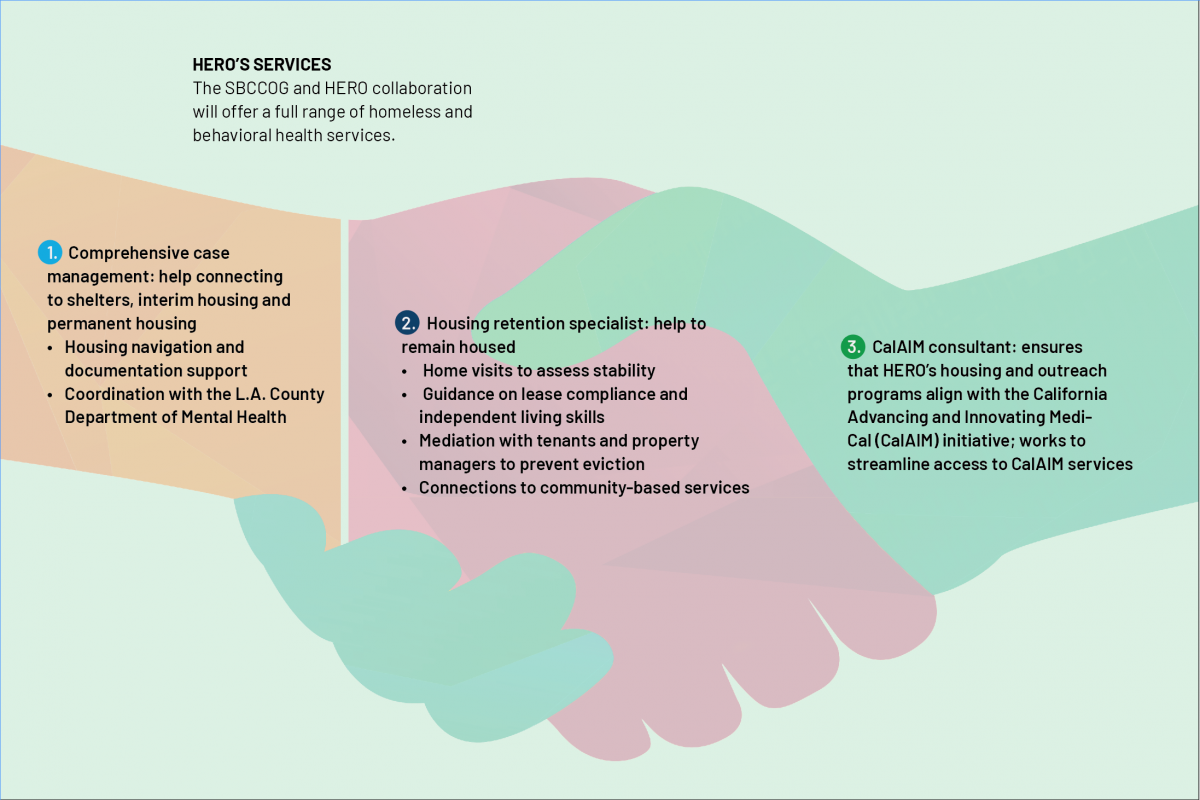
The sheltered individual is working with Gray and fellow case manager Jan Parsons toward the goal of permanent supported housing. Beach Cities Case Management is a newly formed service created to help unhoused individuals in El Segundo, Hermosa Beach, Manhattan Beach and Redondo Beach connect to shelters, interim housing and permanent housing options. Case management is one of three types of services to be provided to the South Bay by a newly formed organization called HERO (Housing, Empowerment, Recovery and Outreach) Community Services.
“These types of successful interventions stand as a testament to what’s possible when empathy meets coordination—from first responders to behavioral health professionals through case managers provided by the South Bay Cities Council of Governments (SBCCOG),” said Joshua Heinzman, president and chief executive officer of HERO. “Each member’s contribution ensures that every individual in crisis is met not with punishment or neglect, but with compassion, care and connection.”
 The SBCCOG retained HERO’s services through the South Bay’s allocation of voter-passed Measure A funds filtered through the Local Solutions Fund and the L.A. County Affordable Housing Solutions Agency (LACAHSA). LACAHSA designates dollars to assist SBCCOG member cities in implementing local services for the unhoused and those at risk of becoming unhoused.
Through the arrangement, HERO will deliver person-centered, field-based outreach, case management and housing retention services designed to help individuals and families experiencing or exiting homelessness achieve long-term housing stability and wellbeing. Together they will collaborate to serve areas throughout the Beach Cities region and the Los Angeles County Department of Public Health Service Planning Area 8.
WORKING TOWARD FUNCTIONAL ZERO
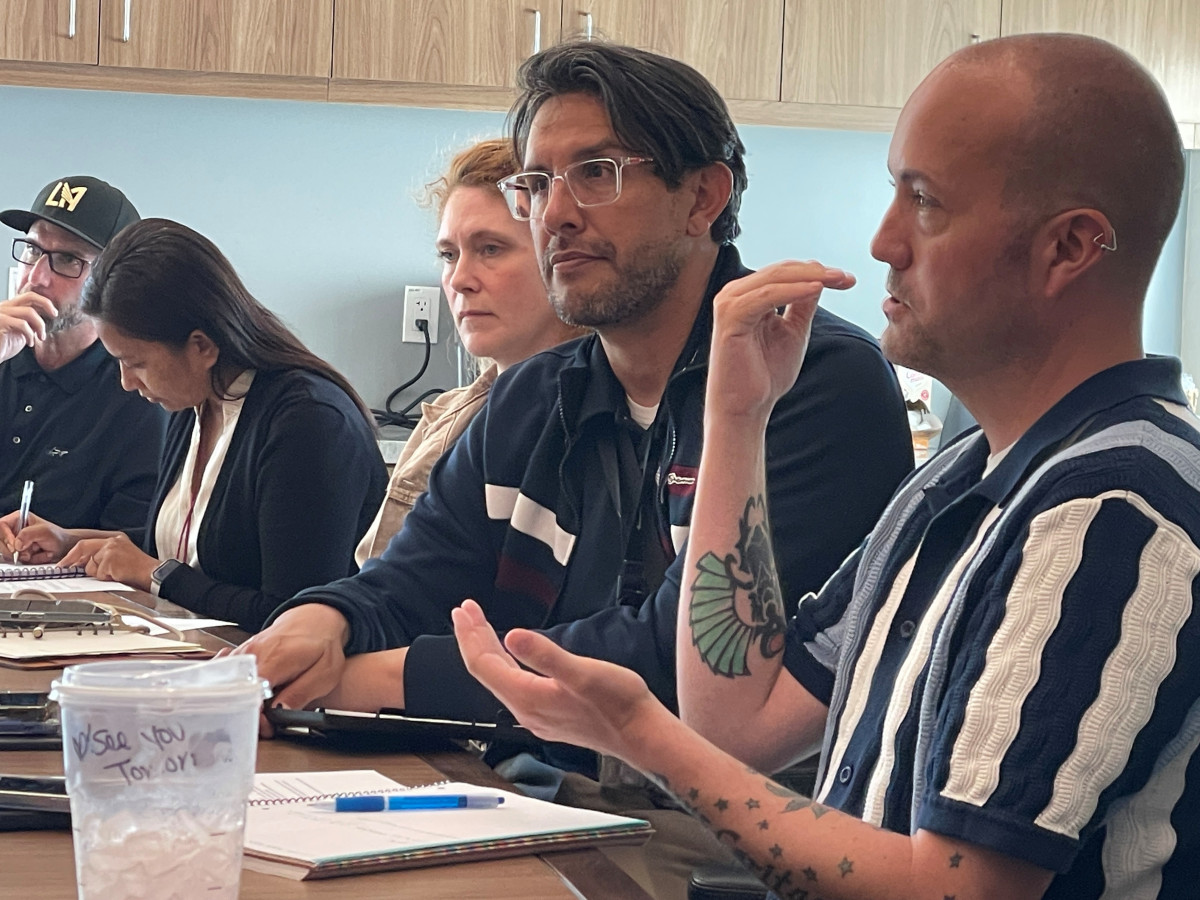
Joshua Heinzman explains to El Segundo city staff HERO’s goal of being “casual and approachable” when interacting with the unhoused. This includes wearing plain clothes instead of a uniform when in the field. Also pictured from left: Matthew Brennan, housing retention specialist, HERO Community Services; Marizen Ramos, special projects administrator, City of El Segundo; Becky Robinson, communications manager, City of El Segundo; and William Gray, co-founder and case manager, HERO Community Services.
“HERO’s mission aligns with our viewpoint that a ‘set-it-and-forget-it,’ one-size-fits-all approach to homelessness doesn’t work,” said Ronson Chu, Homeless Services program manager for the SBCCOG. “As we work toward expanding our successful Functional Zero Street Homelessness Program to all of our South Bay cities, we continue to fine-tune a by-name system that empowers cities to coordinate strategies tailored to meet the specific needs of individuals who are experiencing homelessness.”
In 2024, the SBCCOG helped the City of Redondo Beach decrease its unhoused population by 90% through the Functional Zero Street Homelessness program that the SBCCOG developed in partnership with the city. Functional Zero is reached when the inflow of people experiencing homelessness is less than the outflow and median time spent unhoused is less than 90 days. The SBCCOG is now working with Hermosa Beach, Manhattan Beach and Torrance to expand the program.
Through the partnership, the SBCCOG will further expand its assistance to cities toward reaching Functional Zero accountability goals, which are based on homelessness data collected
and analyzed weekly. HERO will provide critical field-based data, as well as support and follow-up case management to individuals experiencing homelessness.
FILLING SYSTEM GAPS
Heinzman and Gray, longtime leaders in Los Angeles County’s human services network, founded HERO Community Services in the fall of 2025. It emerged from Heinzman’s hands-on work with city and county partners, where he identified consistent gaps in responsiveness, relationship-building and real-time service delivery.
Having led programs for nonprofit and government-funded agencies, including homeless services programs for the Los Angeles Centers for Alcohol and Drug Abuse, he saw the need for a “smaller, intentionally right-sized organization” focused on “quality, compassion and accountability, rather than large-scale
bureaucracy.”
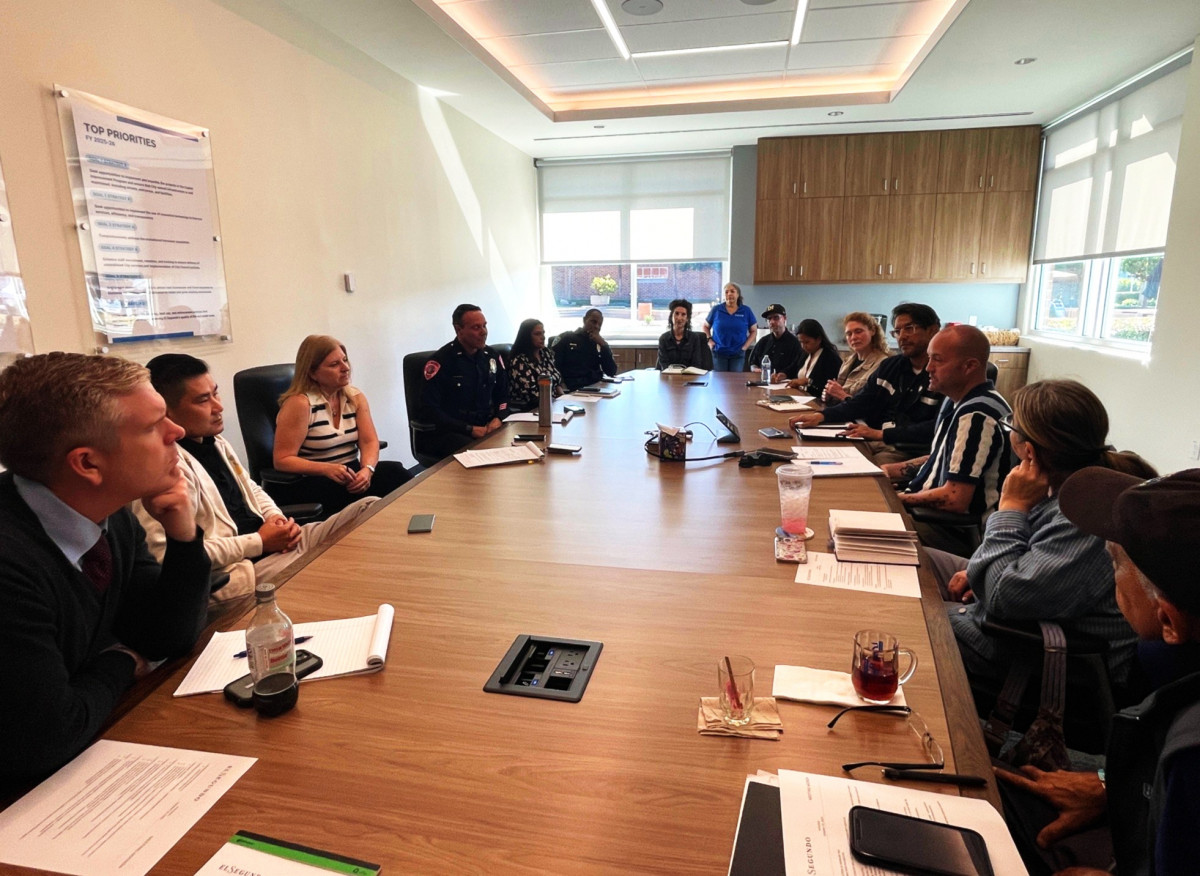
El Segundo city staff, including representatives from the El Segundo Police Department and members of the SBCCOG Homeless Services team, recently met with HERO Community Services to collaborate with the city’s PATCHES (Proactive Approach to Combating Homelessness in El Segundo) program. PATCHES aims to address homelessness with compassion, while maintaining public safety and cleanliness across the community.
“We formed HERO to bring a more human, relationship-centered approach to homelessness and behavioral health services—one that treats every person as seen, heard and valued,” said Heinzman. “We recognized that many existing systems, though well-intentioned, had become too large and procedural to respond effectively to individual and city needs.”
The SBCCOG also works with St. Margaret’s Center to support efforts for the unhoused in areas near Los Angeles International Airport, including Inglewood and the Watts Labor Community Action Committee in the City of Los Angeles communities within the SBCCOG subregion.
“At the SBCCOG, we are very selective about whom we partner with,” said Chu. “HERO brings passion and a breadth of experience to the table that will help us to expand our services, get more individuals inside and off the streets, and prevent them from returning to homelessness.” •
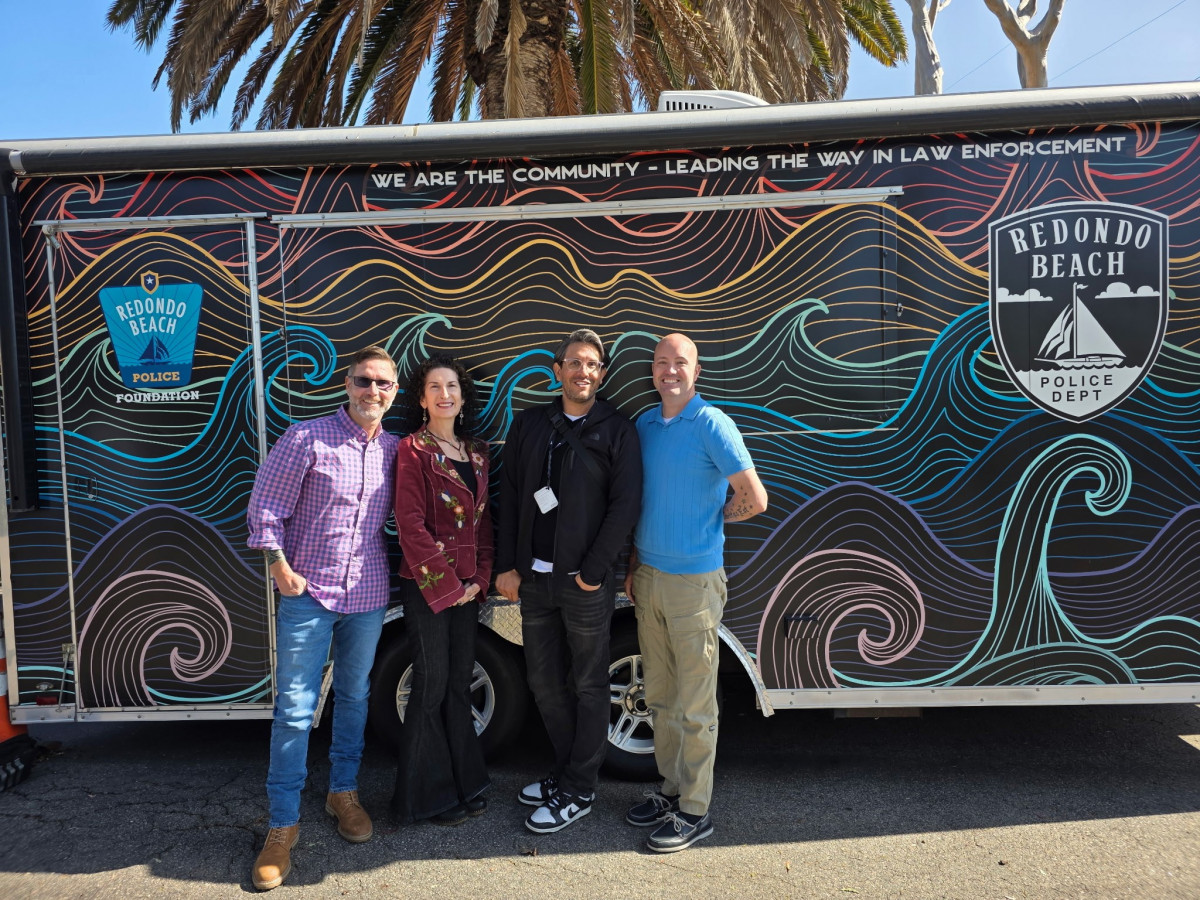
Pictured at Top of Page – From left: The HERO Community Services team—Matthew Brennan, housing retention specialist, Yvonne Golub, CalAim consultant, William
Gray, co-founder and case manager, and Joshua Heinzman, co-founder and consultant—recently paid a visit to the Redondo Beach Homeless
Court, a program that offers unhoused individuals opportunities to erase criminal infractions that prevent employment and housing in
exchange for completing social programs.